Posts

Showing posts with the label Love

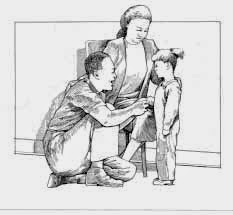
Holy Trinity and the Family
Image
Introduction A Christian family, modeled at the image of the Holy Trinity, must be so much cohered that whoever sees it sees unity, sees love, sees peace, sees harmony, sees stability and security.... These are some of the aspects of a family that render it attractive to the younger generation. Needless to say, backbiting and backstabbing, outbursts of anger and the desire to revenge, separation and divorce, to name but a few, render the institution of marriage unattrative to the younger generation. Holy Trinity and the Family St. John Paul II believed the family would play a vital role in the new evangelization. What would be a family that lives these values in an heroic way? It would be a living testimony of the Gospel of Life put in daily life. This way, the Christian family would not be a mere bystander in the Church’s evangelizing mission. We are in the midst of an eroding cultural crisis. Attempts to redefine marriage and the family are more compelling now that ...

Ascension of the Lord: Reflection (B)

I posted a reflection on the feast of Ascension last year and that post has attracted attention of many visitors to my Blog. This year I want to add a little more of that on this particular feast. The apostle says: “If you have risen with Christ, set your hearts on the things that are above where Christ is, seated at the right hand of God; seek the things that are above, not the things that are on earth. For just as he remained with us even after his ascension, so we too are already in heaven with him, even though what is promised us has not yet been fulfilled in our bodies." "The things above..." In the Eastern rites the feast of Ascension was known as analepsis, the taking up (...above), and also as the episozomene, the salvation, denoting that by ascending into His glory Christ completed the work of our redemption. Taking up and redeeming. These two verbs remind us of two gestures that Jesus did during his ministry. He “held up”, helped up many. He saved many from...

Love and be Silent

I must release others from all my attempts to control, coerce, and dominate them with my love. In their freedom from me, other persons want to be loved for who they are, as those for whoom Christ became a human being, died, and rose again, as those for whom Christ won the forgiveness of sins and prepared eternal life. This is the meaning of the claim that we can encounter others only through the mediation of Christ. Love as the deed of simple obedience is death to the old self and the self's discovery to exist now in the righteousness of Christ and in one's brothers and sisters. [Dietrich Bonhoeffer, Meditation and Prayer] Why is there so much urge to hold on and control, manipulate and use others? Trinity blessed, Father, Son and the Holy Spirit, hear us. O Lord, deliver us from from this vice. Teach us to let others free as you do. To your glory and praise. Amen!

Ashes, Sackcloth and Tears

Lent kicks off with that evangelical call: Repent and believe the Good News. Lent is really a time to renew one's life. The things to be done emerge from the Liturgy of Ash Wednesday: Pray, Fight evil by fasting, and offerings. Then, we have Ashes calling us to the reality of our humanity. We are "made of clay", simple earthenware which should by all means "bring us down" to our senses. That act of imposition of ashes right on our foreheads makes us reflect [moreover when we see ashes on the foreheads of our brothers and sisters]. We are not only reminded of our precariousness but also of the need to rely on God. That cannot be possible unless we are humble enough to take seriously the call to repent and believe the Good News! The image of sackcloth is very touching. We are not dressed in "purple linen". Nothing close to that. We dress in the rough sackcloth [made of sisal threads!] to remind us of our duty to fight the evil. What evil? The evil wi...

Eucharist: Self-donation to the Fullest.

We celebrate the solemnity of the Most Holy Body and Blood of the Lord in a very emphasized manner. Popular piety is publicly acknowledged and used to show this high and most holy Sacrament. How can we bring this Solemnity and its solemn tone into our depths? We have to look at Jesus, the gift himself. He has gathered all virtues into love, which dares to die for the beloved. He has shown us we can bring healing to most people by showing them that they are important, special, valued, and appreciated. yet, their salvation comes only from witnessing that love is the reason we act in that particular way. And love, at the level of God, is sacrifice of the self. Love is the Language of God and it is the universal language. This universal language is understood [or at least perceived, intuited, in the instincts] by all creatures. It is silent, totally silent. It flows in the forces of nature. That language is not taught, it is acquired effortlessly. Yet, somehow, we need to consciously c...

Love Others, even the Unborn

Abortion is an issue that evokes, from all parties, very strong feelings and judgments, and even very heated debates. Abortions are done round the clock in clandestine clinics and sometimes in the most unexpected places. Here, abortion is to be understood as the termination of a pregnancy by the removal or expulsion of a fetus or embryo from the uterus, resulting in death. I know I am not saying everything here. I'm just thinking around. Lack of love is at the root of all evils, and especially the evil of abortion. If love were to be freeing as its nature is, then one cannot try to eliminate another in order for her to feel free from the supposed "burden" of a pregnancy or child. These days I'm planning a seminar for young people wherein I intend to share with them the fact that love is above all sacrifice for another. It is death to the self in order to let emerge another. I want to share with them the fact that abortion is violation of the sanctity of life. I si...

I am the Way, the Truth and the Life.

Image
We are all longing for peace, inner peace I mean. It can never do any good to fool oneself into ignoring the truth, for in deceiving oneself about the truth of one's own life, one is certainly deceiving oneself about the Truth, God's truth as well. The truth shall make you free. Yes, the Truth shall make you True. The truth shall make you free. And the Truth will sure make you a Son of God. God's truth is God's love, and God's love frees us from ourselves for the other. To be free means nothing except being in love. And being in love means nothing except being in God's truth. If I let this be, I can say like the Lord, "I'm the Way, the Truth and the Life."

Love, Expectations, and Joy

My friends, sometimes people can’t express love in the same way as you can and they are often thought of as not loving you. yeah, some of us have chosen not to express love in some of those mundane-carnal ways. Understanding that everyone is different helps you to understand your own capacity to love and not put expectations on someone else to fulfill you. " I'm busy putting expectations for myself and fulfilling them to my satisfaction. I really do not have time to fulfill yours ". Such a statement is a statement of love, not indifference or disrespect. And God has said, " Love them as I have loved you ". It sounds like, love them by obeying Our Father, who speaks through his Spirit deep down your heart!

Lenten Reflections: Cottolengo Family

Centered on Divine Providence (Mt. 6:31-34). Introduction This evening our series of reflections will be a look into our activities as people called to live charity as a witness to the love of God the Provident Father. I know we all will see that we want to focus on Divine Providence as the Key to Cottolengo Spirituality but also as part of Christian living. What aspects should be reflected in our work so that all our institutions, our activities and our plans appear as the work of Divine Providence? In other words, what are the characteristics proper to Cottolengo institutions, to people who live a spirituality centered on Divine Providence? Let’s try to analyze some. 1. A Cottolengo institution that is founded on the Divine Providence recognizes God as the principle cause and the human person takes the role of “the manual labourer”, in terms used by Cottolengo Himself. This does not mean that the human person is untrained while God is the absolute expert. No. It rather means t...